
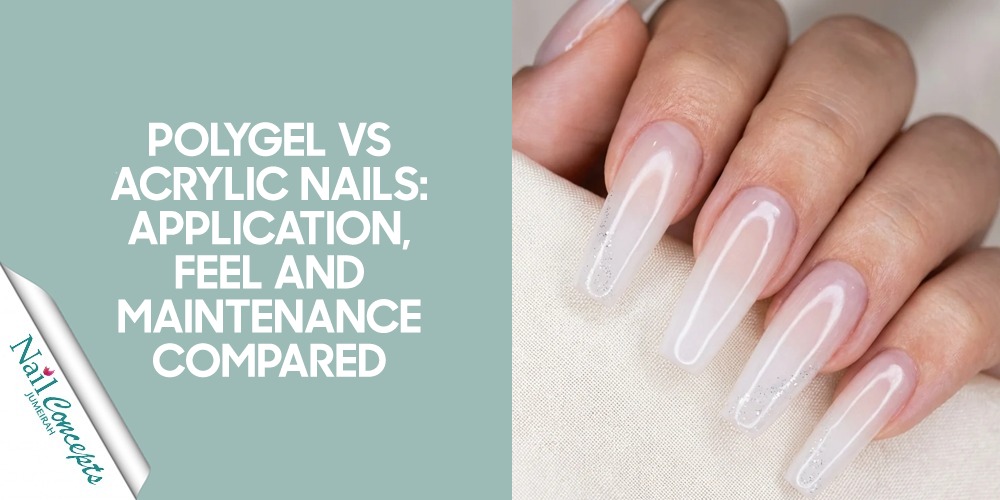
Both polygel and acrylic nails will give length, strength and shape to your natural nails. They seem the same when finished, yet they are constructed differently; they feel different in your hands, and they need different care.
If you are intending to visit a salon in Dubai, this advice can assist you to find one that suits your lifestyle.
What Is the Main Difference Between Polygel and Acrylic Nails?
The primary difference is the material. Acrylic nails are formed from a liquid and powder mixed to form a soft bead that hardens in the air. Polygel nails are a thick gel, similar to putty, which cures under a UV or LED bulb.
Polygel is essentially a hybrid of acrylic and gel. It is as tough as acrylic, yet has the soft, silky feel of gel. Both are nail extension methods, meaning a nail tech develops extra length and structure on top of your original nail or on a nail tip.
What Are Acrylic Nails?
Acrylic nails are among the oldest and most reputable types of nail extensions. A nail technician puts a brush into a liquid known as monomer, then into a colored or clear powder known as polymer. They are applied to the nail and molded by hand, together forming a little bead.
The bead begins to solidify almost immediately, so the technician has to work fast and skillfully. When it dries, the nail is hard, solid and durable. Acrylic may be filed into just about any shape, including square, almond, coffin or stiletto.
What Are Polygel Nails?
Polygel is a new product that’s in a tube. It looks like thick soft gel and does not flow or dribble. The technician puts a tiny amount of product on the nail or on a nail form and then shapes it with a brush and a particular slip solution.
Polygel remains soft until it hits a nail lamp. A lot of people think that polygel is easier to control because it allows the technician more time to get the shape right. Once cured under the lamp, the nail is hard and ready to be filed and completed.
How Are Polygel and Acrylic Nails Applied?
Both services start the same way. The technician cleans your hands, pushes back the cuticles, lightly buffs the nail surface and removes oil so the product can stick well. After that, the steps are different.
Acrylic application:
- A nail tip or form is placed on your nail.
- The technician dips the brush into liquid and powder.
- Small beads are placed and shaped on the nail.
- The nail air-dries and hardens.
- The nail is filed, buffed, and then coloured or polished.
Polygel application:
- A nail tip or form is placed on your nail.
- The technician squeezes out a small amount of polygel.
- The gel is shaped with a brush dipped in slip solution.
- The nail is cured under a UV or LED lamp.
- The nail is filed, buffed, and then coloured or polished.
Acrylic uses a mixing process and air-drying, so it takes speed and practice. Polygel gives more working time because it only hardens under the lamp. The total appointment time is often close for both, because it depends on the length, the design and the technician.
What Is the Difference in Smell?
The acrylic liquid has a strong, pungent fragrance. You’ll smell it the second you enter the nail salon. This fragrance stems from the monomer, and excellent ventilation in a salon helps to make it bearable.
Polygel has a very faint fragrance or none at all. If you are sensitive to strong smells, this can be a huge incentive to go for polygel.
How Do Polygel and Acrylic Nails Feel?
This is where most people notice the real difference. Here is a quick look:
| Feature | Acrylic Nails | Polygel Nails |
| Material | Liquid and powder | Thick gel from a tube |
| How it hardens | Air-dries | Cures under a UV/LED lamp |
| Smell | Strong | Mild or almost none |
| Weight | A little heavier | Light and thin |
| Flexibility | Firm and rigid | Slightly flexible |
| Working time for the technician | Short | Longer |
| Best for | Long, strong, dramatic shapes | Natural look and comfortable wear |
Acrylic feels firm and solid. It does not bend much, so it is a great choice if your nails are hard on daily tasks or if you want long, sharp shapes. Some people find it a little thick or heavy, especially in the first few days.
Polygel feels light and smooth. It has a small amount of flex, which makes it feel closer to a natural nail. Many people say it is more comfortable to type, text and do everyday jobs with polygel on.
Both can feel strange for the first two or three days. Your fingers need a little time to get used to the new length. That is normal, and it passes.
How Strong and Long-Lasting Are Polygel and Acrylic Nails?
Both are strong when applied well. With appropriate care, either usually lasts two to three weeks before a fill is needed. Beyond that, your natural nail grows out and creates a small gap by the cuticle.
Acrylic is durable and will take a lot of wear. Polygel is also sturdy, but the small flex in it helps it avoid cracking in some circumstances. Strength also depends on how thick the nail is formed, how the nail was prepared and how well you take care of it at home.
How Do You Maintain Polygel and Acrylic Nails?
Maintenance is similar for both, and it is one of the biggest parts of keeping your nails healthy.
Get regular fills. As your natural nail grows, the nail extension moves forward and leaves a gap. A fill adds fresh product to that gap and fixes the shape. Most people book a fill every two to three weeks.
Use cuticle oil every day. Oil keeps the skin around your nails soft and helps stop dryness. This matters even more in Dubai, where air conditioning dries out the skin.
Be gentle with your hands. Do not use your nails to open cans, peel stickers, or scrape things. Wear gloves for washing dishes and cleaning.
Watch for lifting. If you see a gap between the nail and the extension, or a tiny crack, go back to your salon. Water can get into those spaces and cause problems if they are left alone.
Never pull or peel your nails off. This is the most common mistake. Pulling off an extension also pulls away layers of your natural nail, and that can leave it thin and sore.
How Are Polygel and Acrylic Nails Removed?
Removal should be done by a professional tech. Acrylics are normally filed first, then soaked in acetone until the rest turns soft. First, polygel is filed down, and then the remaining layer is soaked off. Because it is a gel-based product, Polygel can take a bit longer to absorb.
Safe removal ensures your natural nails are safe. If you try to rush it at home, you could break the nail plate.” Nail Concepts Dubai also offers safe removals and acrylic and polygel nail extensions, so your natural nails are pampered from beginning to end.
Which One Is Better for You?
Neither one is better for everyone. The right choice depends on what you need.
Choose acrylic if:
- You want strong, long or dramatic nails.
- You use your hands a lot and want firm nails.
- You like a classic, trusted nail extension.
Choose polygel if:
- You want a light and comfortable feel.
- You are sensitive to strong smells.
- You like a natural, smooth look.
If you are still unsure, tell your nail technician how you use your hands every day. A short chat about your work, hobbies and nail length goals can make the choice much easier.
Do Polygel or Acrylic Nails Damage Natural Nails?
Done and taken off the appropriate way, neither one has to hurt your nails. Most of the time, nail damage happens for the same few reasons: rough filing, peeling the nails off, missed fillings or bad removal.
A good technician, clean instruments and correct aftercare will keep the nail plate healthy. If your natural nails seem particularly thin, uncomfortable or discolored, take a break and see a nail professional or doctor.
Final Thoughts
Both Polygel and artificial nails give you long-lasting, gorgeous extensions. Acrylic is stiff and durable. Polygel is lightweight, silky and simple to wear. Either way, regular fills, daily cuticle oil and safe removal will help to maintain your natural nails’ health.
If you are ready to book, Nail Concepts Dubai’s specialists can help you choose between acrylic and polygel based on your nail shape, your daily routine and the appearance you want to achieve.